
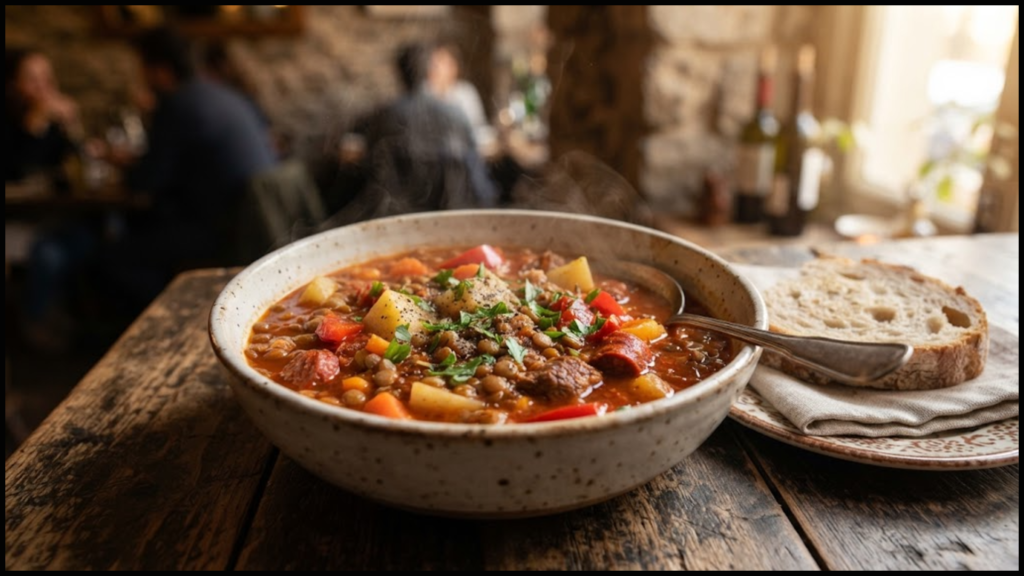

When the weather turns cool or you simply want something warm, filling, and deeply comforting, searching for the best guiso de lentejas near me can lead to one of the most satisfying meals in Spanish and Argentine-inspired cuisine. Guiso de lentejas is much more than an ordinary lentil dish. It is a slow-cooked stew built around tender lentils, vegetables, aromatic seasonings, and, in many traditional versions, meat, sausage, or smoky ingredients that create a rich and hearty flavor.
What makes this dish particularly appealing is its flexibility. A traditional guiso de lentejas can be rustic and thick, intensely savory and meaty, or lighter and vegetable-focused. Different cooks have their own approach, which means two bowls of lentil stew can taste completely different while still carrying the same comforting identity. If you are looking for the best guiso de lentejas near me, understanding what makes a truly memorable version can help you recognize quality before ordering.
What Is Guiso de Lentejas?
Guiso de lentejas is a traditional lentil stew associated especially with Argentine home cooking and broader Spanish-influenced culinary traditions. The word “guiso” generally refers to a stew in which ingredients are cooked together slowly so their flavors combine. Lentils provide the foundation, while onions, peppers, tomatoes, carrots, potatoes, herbs, spices, and other ingredients build the character of the dish.
A traditional Argentine-style version can include beef, pancetta, chorizo, tomato, onion, red pepper, potatoes, carrots, and stock. Some preparations are thick enough to almost resemble a rich casserole, while others contain more broth and have a soup-like consistency.
The beauty of guiso de lentejas comes from its simplicity. It does not depend on complicated culinary techniques. Instead, the flavor develops through good ingredients, careful browning, balanced seasoning, and enough cooking time for the lentils and vegetables to become tender.
This is also why searching for the best guiso de lentejas near me is not simply about finding a restaurant that has lentil stew on its menu. The real goal is to find a version with balance, depth, texture, and authentic comfort-food character.
The History Behind Guiso de Lentejas
Lentils have been part of human diets for thousands of years, and lentil-based stews have appeared across numerous culinary traditions. The dish known today as guiso de lentejas in Argentina developed through layers of Spanish and European influence and local cooking traditions.
Spanish culinary traditions brought lentil preparations to the Americas, while later immigration helped shape Argentine food culture. Over time, cooks adapted familiar recipes to available local ingredients and personal preferences. Guiso de lentejas became associated with practical home cooking because lentils were affordable, filling, and easy to combine with vegetables and other pantry staples.
Argentine culinary references describe lentil stew as a particularly popular cold-weather dish, with versions appearing in both family kitchens and traditional restaurants. Some historical accounts also connect its popularity with European immigrant communities and the development of neighborhood eateries known for hearty, inexpensive meals.
The dish continued evolving rather than remaining fixed to one recipe. Some cooks added chorizo and pancetta, while others preferred beef. Vegetables could change according to region, season, or family tradition. This adaptability is one reason guiso de lentejas remains relevant today.
Why Guiso de Lentejas Became Such a Popular Comfort Food
There is something naturally satisfying about a bowl of stew that has been cooked until every ingredient becomes tender and flavorful. Lentils provide body and substance, vegetables contribute sweetness and freshness, and spices bring warmth.
For generations, dishes like guiso de lentejas have represented practical cooking. A single pot can feed several people, ingredients can be adjusted according to availability, and leftovers often become even more flavorful after resting.
This practicality has helped the dish move beyond the home kitchen. Restaurants can offer a generous, comforting meal without turning it into an overly complicated fine-dining experience.
Today, people searching for the best guiso de lentejas near me may find everything from traditional family-style preparations to modern interpretations that use vegetarian ingredients, different grains, seasonal vegetables, or contemporary presentation.
What Makes the Best Guiso de Lentejas Near Me Worth Trying?
Finding a good lentil stew is about more than seeing the name on a menu. The quality becomes obvious when you taste the relationship between its ingredients.
The lentils should be tender but should not completely disappear into the liquid unless the particular style is intentionally very thick. A good stew has a satisfying texture in every spoonful. The vegetables should be soft enough to blend naturally with the lentils while still maintaining some character.
Flavor is equally important. The best versions usually have a savory foundation created by onions, garlic, peppers, tomatoes, stock, herbs, and spices. If meat is included, it should contribute richness without completely overwhelming the lentils.
A well-made guiso de lentejas should also have a balanced consistency. If it is excessively watery, the ingredients may feel disconnected. If it is too dry, the dish can lose the comforting quality that makes stew so appealing.
The Importance of Lentils
Lentils are the heart of the dish, so their preparation has a major influence on the final result. Brown and green lentils are commonly used because they can hold their shape during cooking, while red lentils tend to soften more quickly and can create a creamier texture.
Some recipes recommend soaking lentils before cooking, while other preparations use lentils without an extended soaking period. The exact approach depends on the variety and recipe. A traditional recipe published by Argentina’s CONICET, for example, describes soaking lentils before cooking and recommends monitoring the stew so it does not become dry.
For restaurant diners, the important thing is not necessarily how the kitchen prepares the lentils but whether the finished texture feels intentional. Good lentils should complement the stew rather than turn into an indistinguishable paste.
Vegetables That Build the Flavor
Vegetables play a much bigger role in guiso de lentejas than simply adding color.
Onion is often one of the first ingredients used to establish the flavor base. Red or green peppers can add sweetness and aroma, while carrots contribute a gentle natural sweetness. Garlic brings intensity, and tomatoes provide acidity that prevents the stew from becoming excessively heavy.
Potatoes or sweet potatoes are also common in some versions. They absorb the surrounding flavors while adding additional substance to the meal. Argentine recipes can vary considerably, with some preparations including sweet potato, while others focus more heavily on lentils, meat, tomato, and aromatics.
This combination creates the layered flavor people often expect when searching for the best guiso de lentejas near me.
Meat, Chorizo, and Traditional Richness
One of the biggest differences between guiso de lentejas recipes is the use of meat.
A hearty Argentine version may contain beef, smoked pancetta, or chorizo. These ingredients can introduce smoky, salty, and deeply savory flavors. Some restaurant versions use several meat ingredients together, creating an especially rich winter stew.
However, more meat does not automatically mean better guiso de lentejas. The strongest preparations maintain a relationship between the meat and lentils rather than allowing the sausage or bacon to dominate everything.
Traditional Argentine cooking sources commonly include beef, pancetta, chorizo, vegetables, tomato, stock, and seasonings in their versions of the dish.
For diners, this means it is worth considering what style you prefer. If you enjoy smoky, rich flavors, a version with chorizo and pancetta may be ideal. If you prefer the earthy flavor of legumes, a vegetable-focused version may be more appealing.
Vegetarian Guiso de Lentejas Can Be Just as Satisfying
Not every great guiso de lentejas needs meat.
A vegetarian preparation can use mushrooms, roasted vegetables, tomato, peppers, carrots, potatoes, pumpkin, herbs, and spices to develop complexity. Lentils themselves provide substantial texture, making them particularly suitable for plant-based stews.
Modern cooks are increasingly interested in vegetable-forward versions because they can provide the comforting character of traditional stew without relying on meat. Some restaurants also offer vegan or vegetarian variations for customers who want a lighter interpretation.
When comparing the best guiso de lentejas near me, do not assume that a meat-free version is automatically less authentic or flavorful. The success of the dish depends on how the ingredients are cooked and seasoned.
The Role of Seasoning
Seasoning is where a simple lentil stew can become memorable.
Paprika is frequently associated with Spanish and Argentine-style preparations, while black pepper, oregano, bay leaf, cumin, chili, and garlic may appear depending on the recipe.
Some versions have a gentle warmth, while others include noticeable chili or smoky paprika. The best approach is usually balance. Seasonings should support the earthy flavor of lentils instead of masking it.
A good cook also seasons throughout the cooking process rather than adding all the salt and spices at the very end. This allows the flavors to become integrated as the stew develops.
Why Slow Cooking Matters
Although guiso de lentejas does not always require an extremely long cooking time, gentle cooking can make a major difference.
Slow simmering allows the vegetables to soften and the flavors to blend. If meat is included, gradual cooking can make tougher cuts more tender. Lentils also absorb the surrounding flavors as they cook.
Professional Argentine cooking sources commonly build the dish by browning meat and aromatic ingredients first, then adding vegetables, tomato, lentils, and cooking liquid before allowing the stew to simmer.
This layered approach explains why a restaurant’s stew can taste much deeper than a quick lentil dish prepared without enough cooking time.
How to Recognize a High-Quality Restaurant Version
When searching for the best guiso de lentejas near me, pay attention to more than presentation.
A good bowl should arrive hot and smell immediately inviting. The aroma should suggest cooked vegetables, herbs, spices, and the savory character of the stew. The color may range from reddish-brown to deep earthy orange depending on the ingredients.
The first spoonful should reveal several layers rather than one dominant flavor. You should be able to notice the lentils, vegetables, seasoning, and any meat used in the recipe.
Texture is another important clue. Lentils should be tender without feeling completely overcooked, while potatoes and vegetables should be soft without collapsing into a watery mixture.
Finally, the portion should feel generous and satisfying. Guiso de lentejas is traditionally a substantial dish, so a small portion may not deliver the experience diners expect.
Guiso de Lentejas Compared With Other Stews
Guiso de lentejas occupies an interesting position among international comfort foods.
Compared with a traditional beef stew, lentil stew generally has a stronger legume character and can be more economical. Compared with lentil soup, guiso de lentejas is usually thicker and more substantial. Compared with chili, it typically emphasizes lentils and vegetables rather than beans, chili peppers, and a chili-heavy spice profile.
It can also be compared with other Argentine comfort foods such as locro. Both can be substantial winter dishes, but their ingredients and textures are different. Guiso de lentejas places lentils at the center, while locro traditionally involves corn and other ingredients.
These distinctions can help you decide what you actually want when looking for the best guiso de lentejas near me rather than simply searching for any warm stew.
Why People Love Guiso de Lentejas in Cold Weather
Cold weather and lentil stew seem almost naturally connected.
A hot bowl provides warmth and a sense of fullness, while the combination of legumes, vegetables, and optional meat makes it feel like a complete meal. In Argentina, guiso de lentejas is strongly associated with winter cooking and hearty family meals.
However, there is no rule saying you can only enjoy it during winter. Restaurants and home cooks can adapt the dish for different seasons by changing the vegetables, reducing the richness, or creating a lighter broth.
Nutritional Benefits of Lentil Stew
Lentils are widely valued for their nutritional profile. They provide plant-based protein, dietary fiber, complex carbohydrates, and several important micronutrients.
A vegetable-rich guiso de lentejas can therefore be a filling meal with substantial nutritional value. The exact nutritional profile depends on the recipe. Adding large quantities of pancetta, sausage, or fatty meat will increase the calorie and fat content, while a vegetable-based version may be lighter.
This flexibility makes lentil stew useful for different eating preferences. A diner can choose a traditional meat-rich preparation or look for a vegetarian version depending on dietary goals.
The dish’s nutritional appeal is one reason lentils continue to appear in modern comfort-food menus even as culinary trends change.
Modern Trends in Guiso de Lentejas
Traditional food is increasingly being reinterpreted by modern restaurants, and guiso de lentejas is no exception.
Some chefs focus on premium ingredients and careful presentation while maintaining the rustic identity of the dish. Others experiment with vegetarian versions, plant-based proteins, smoked vegetables, seasonal produce, or different spice combinations.
There is also growing interest in food that feels authentic without being unnecessarily complicated. Guiso de lentejas fits this trend perfectly because its identity comes from honest ingredients and slow-developed flavor rather than elaborate presentation.
The most interesting modern versions often respect the foundation of the dish while adding a personal touch.
How to Choose the Best Guiso de Lentejas Near Me
Your definition of “best” should depend on what you want from the meal.
If you want traditional Argentine comfort food, look for a stew featuring lentils, beef or chorizo, pancetta, vegetables, tomato, and warm seasonings. If you prefer something lighter, a vegetable-based preparation may suit you better.
If you enjoy thick stews, choose a preparation described as hearty, rustic, or slow-cooked. If you prefer more broth, look for a soupier version.
It can also help to consider whether the restaurant prepares the dish fresh. Lentil stew often tastes excellent after resting because the flavors have time to mingle, but it should still retain a fresh and appealing texture.
What to Eat With Guiso de Lentejas
Guiso de lentejas can easily stand alone as a complete meal, but accompaniments can change the experience.
Crusty bread is an obvious companion because it can absorb the rich cooking liquid. Fresh parsley can provide contrast, while a little acidity from lemon or another bright garnish can balance a particularly rich stew.
Some preparations are served with rice or other grains. Others are substantial enough that no additional side is necessary.
The ideal accompaniment depends on the thickness and richness of the particular guiso.
Tips for Ordering Guiso de Lentejas
When you find a restaurant offering lentil stew, do not hesitate to ask what style they serve. You can ask whether it contains beef, chorizo, pancetta, or vegetables and whether the dish is spicy.
This is particularly useful if you have dietary restrictions or simply have a specific flavor preference.
It is also worth asking whether the stew is a daily special or a regular menu item. In many restaurants, traditional dishes may be prepared in larger batches on specific days when demand is higher.
If you want the richest experience, ordering the dish when it is freshly prepared or traditionally served can make a noticeable difference.
Why Homemade and Restaurant Guiso Can Taste Different
Restaurant guiso de lentejas and homemade versions often have different personalities.
At home, the cook may adjust the ingredients based on family preferences. One household might use extra carrots, another might add more chorizo, while someone else may prefer a vegetarian preparation.
Restaurants tend to create a more consistent recipe because they need to deliver a similar experience repeatedly. Professional kitchens may also have access to high-quality stock, carefully selected meat, and larger cooking vessels that influence the final result.
Neither approach is automatically better. Homemade guiso often carries emotional and family value, while a restaurant version can provide a polished interpretation of a familiar dish.
Common Questions About Guiso de Lentejas
Is guiso de lentejas the same as lentil soup?
Not exactly. Both use lentils, but guiso de lentejas is generally thicker, more substantial, and more stew-like. It may contain meat, potatoes, vegetables, tomato, and other ingredients that create a complete one-pot meal.
Is guiso de lentejas spicy?
It depends on the recipe. Some versions are mild and rely on paprika, herbs, garlic, and black pepper for flavor. Others use chili or hot spices for additional heat. If you prefer mild food, asking the restaurant before ordering is a good idea.
Does guiso de lentejas always contain meat?
No. Traditional versions often include meat or sausage, but vegetarian and vegan preparations are also possible. A well-made meat-free version can still have substantial flavor because lentils, vegetables, tomato, herbs, and spices provide a strong foundation.
Why is guiso de lentejas popular in winter?
The dish is hot, filling, and rich in texture, making it particularly comforting in cold weather. Its association with winter is especially strong in Argentine food culture.
What makes the best guiso de lentejas near me different?
The strongest versions usually combine properly cooked lentils with balanced seasoning, flavorful vegetables, a well-developed base, and an appropriate consistency. If meat is included, it should complement rather than overpower the lentils.
The Growing Appeal of Traditional Comfort Food
Modern food culture changes quickly, but traditional dishes continue to attract diners because they provide something trendy food cannot always reproduce: familiarity.
Guiso de lentejas feels genuine because it is based on ordinary ingredients transformed through patient cooking. It does not need extravagant decoration to be satisfying.
That quality has helped traditional lentil stew remain relevant in restaurants and homes. People searching for the best guiso de lentejas near me are often looking for more than food. They are looking for warmth, flavor, value, and an experience that feels comforting.
Final Thoughts on Finding the Best Guiso de Lentejas Near Me
The search for the best guiso de lentejas near me ultimately comes down to understanding what makes this humble stew special. Its history reflects the movement and adaptation of culinary traditions, while its modern popularity demonstrates that simple comfort food still has an important place at the table.
A memorable guiso de lentejas should have tender lentils, a flavorful base, well-cooked vegetables, balanced seasoning, and a consistency that feels rich without becoming heavy. Traditional versions may include beef, chorizo, or pancetta, while modern recipes can take a vegetable-forward or completely plant-based approach.
The best bowl is not necessarily the most expensive or elaborate one. It is the one where every ingredient works together and where the first spoonful makes the dish feel warm, satisfying, and thoughtfully prepared.
Whether you discover your favorite version at a traditional restaurant, a neighborhood kitchen, or your own home, guiso de lentejas proves that great food does not need to be complicated. Sometimes a pot of lentils, vegetables, carefully chosen seasonings, and patience is enough to create a meal worth remembering.